Wednesday, 4 February 2015

#15 Rotterdam School of Management, Erasmus University (RSM) (2)

  Rotterdam, The Netherlands
 
CEMS Communications Committee Rotterdam


I believe that RSM is a great University to boost your CV, gaining academic expertise and profiting from great corporate events. I think that RSM is definitely manageable and not as bad and tough as everyone is saying. But I think one has to be aware of the fact that it is hard to get very good grades even though you worked very hard and the average is also always lower than I experienced at other Universities. In general, the education system in the Netherlands is hard and very high grades are almost impossible.

I enjoyed very much the life in Rotterdam, the area I lived in (Kralingen), the amazing sports opportunities (outside and gym), the very nice bars and restaurants at Witte de Withstraat, and the very convenient way to get to the airport and to Amsterdam by train. I also loved the biking culture and there is no way to live in Rotterdam without a bike. Everything is very easy and fast to reach with a bike and public transport is very expensive.

Courses

·        Mandatory Course Global Strategy (7,5 ECTS): You can choose between International Strategy and International Entrepreneurship, both courses are accepted for the mandatory Global Strategy course. I highly recommend International Entrepreneurship, less workload and better grades. Only one big group assignment, which counts 50% of your grade. The task is to work closely with a startup together on a topic concerning growth and international expansion and writing a teaching case and note and preparing a presentation. 10% participation and exam 40%. In the exam you get a case to which you have to apply the theory learned in class.

·        Strategy of Innovation (5 ECTS): A core course of the Innovation Master at RSM, very interesting course but demanding professor. You have several group assignments to do on the basis of cases and articles, which are all relevant for the exam. But, since each case and article is discussed in class extensively and you work on it in the group assignments, there is not much in terms of exam preparation, if you really read all the articles and participated during class. Good grades definitely possible, but requires a good understanding of the theories! But very interesting course.

·        Marketing Strategy Research (4 ECTS): Major of the Marketing Master and requires a very good level of statistics and SPSS. The course consists of 5 individual assignments and an exam both worth 50%. Out of the 5 individual assignments only the best 3 are counted. The professor explains in the 3 hours lecture new concepts in SPSS and in the afternoon in the lab session you get your individual assignment, which you have to fulfil within one week. In the lab session there is always a tutor, who helps you and answers questions regarding the assignment. Exam is based only on SPSS output, which you have to interpret. Would only recommend this course if you have fun and prior experience in working with SPSS.

·        Corporate Development: Strategies for Acquisition and Alliances (5,5 ECTS): A core course of the Strategy Master at RSM. The professor has a great level of expertise in this field, which you definitely get to profit from in class, where he uses a variety of real life cases of M&As and alliances. The course consists of 5 group assignments out of which 2 get randomly selected and thus 40% of your total grade is derived from. We also did not get any feedback on the assignments until the end, since it is a course of over 300 students and 45 groups. Hence, grading took a long time. You also have the potential to write a company assignment on a selected company and a potential alliance or M&A, which allows you to gain 0,25; 0,5; or 1 point higher of your final grade, which is a very nice option for a 5-page assignment to boost your grade. Exam very easy and very close to the group assignment you did during class. I really enjoyed the course and learned a lot, but he is very hard in giving good grades.

·        Building Healthy Organizations for Optimal Human Performance (5 ECTS): A course of the Human Resources Management Master at RSM. Similar to the “Positive Organizations” course at NOVA in terms of topics covered in class. Very nice and interesting professor, who has immense expertise in Psychology including topics, among others, like burn out.  You have one big group assignment (25%), several group assignments on a pass and fail basis (10%) and a so-called “self-reflection” assignment (20%), for which you get each week new work like tests, or exercises to do. In general, there are a variety of assignments to do for the course but very easy. Exam 45% on the basis of multiple-choice question, which are definitely not to underestimate. Good grades definitely possible.

Housing
I lived in Kralingen (close to the Metro station Voorschoterlaan), which is a beautiful area with a lot of families beautiful houses and also the area where most of the students live. It takes you with the bike 3-10 minutes to Uni, depending on where you are living. There is also everything you need in Kralingen many shops, supermarkets cafes and an amazing lake perfect for running.

Also a very cool and “in-place” to live is around Witte de Withstraat, where all the nice bars and restaurant are, basically the place to be when you plan to go out. But you need at least 20 min with the bike to Uni and of course it is a very lively area.

Living on the campus is also an option. The Hatta building is the student-housing place on the campus with very modern facilities. However, I believe it is very expensive and you are able to get way better rooms for a cheaper price outside Uni for example in Kralingen.

Searching for places is almost solely done via Facebook on pages like Commodity Market Rotterdam; Housing Rotterdam; Buying & Sell Rotterdam; Housing Rotterdam RSM. Beginning of each new semester you find an abundance of offers in these groups. But, good areas like Kralingen are very competitive and you really have to try to stand out in the application for a room and why you fit into the apartment.

 University
RSM offers an amazing modern gym with also a lot of courses every day, several squash courts and many more for 65 Euros for 5 months in total. When you get to RSM you should definitely get a gym card, it is the best offer you can get by far in Rotterdam for a gym contract.

There are many study possibilities like in the T building there is a library only for master students or the big library for everyone in the C building. I also liked to study in the Erasmus Paviljoen, since it is a very nice building and a good place to study.

The campus also offers a supermarket, 2 cafeterias with very nice and cheap food, Starbucks, and many more restaurants and snack bars in the so-called “Food Corner”. In the Erasmus Paviljoen is also a very nice restaurant and bar, where it is definitely recommendable to have lunch or dinner as well for fair prices.


Sightseeing
Holland offers a lot of places to see. Especially Amsterdam, The Hague, and Delft should be on the list. Everything is easy accessible by train. Also in Rotterdam there is a lot to see, like the brand new and one of the biggest indoor market halls in Europe.

You should definitely get the “Rotterdam Pass”, which allows you to get great offers in restaurants, several cinema visits for free, discounts on museum entrance or the famous harbor boat trips and many more. Officially you have to be registered for the Rotterdam Pass, which is difficult to realize when you rent a private apartment for only a semester, but usually there is still a way to get it.

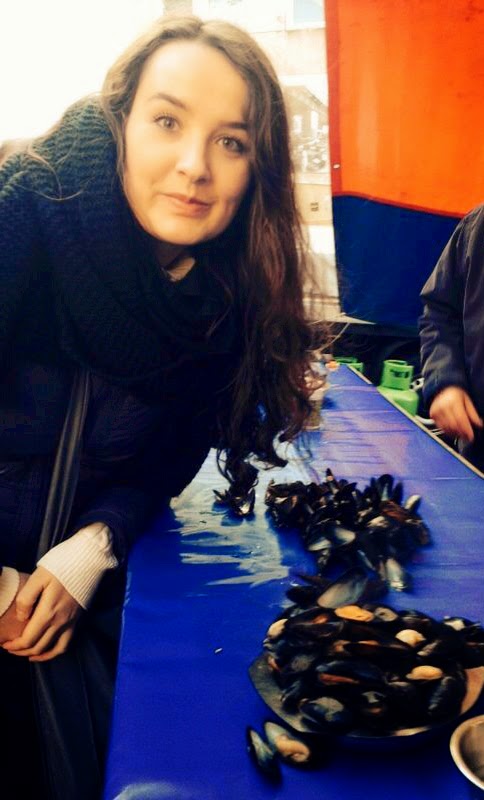
Saturday and Tuesday there is the big market at Blaak and I highly recommend getting fruits and vegetables there since it way cheaper than in any supermarket and the quality is especially in the summer even better. Also for getting fresh fish, seafood and good cheese it is very recommendable.

I also recommend “Café Belmondo” between Blaak and Kralingen where usually students go to study offering free Wi-Fi, nice coffee and snacks. The café also offers a silent area or the usual public place for everyone.

 Visa
Since I am a European citizen I did not need a Visa.

Vaccines
Not necessary.

Work Projects
I did not do my work project at RSM. Generally RSM offers a variety of corporate events every week, usually published in the weekly CEMS Newsletter. I highly recommend staying updated regarding these opportunities, since there are really a variety of very good events you can participate in.

Surprises
Positive: Gym facility on the campus.


--

By Roxana Plötz, Class of 2014/2015
Term abroad - Fall 2014

Nationality: German
Country of residence: Germany
Home School: NOVA
Host School: Rotterdam School of Management, Erasmus University


#14 Universidad Adolfo Ibáñez (UAI)


Santiago, Chile 


Chile

Chile is an amazing country! With its long extension, it comprises both a desert and glaciers and the landscape is just out of the imagination. Distances are ridiculously large and taking planes is often necessary to travel, but totally worth it. Often called as “the Singapore/Switzerland of Latin America”, Chile is booming and it is considered stable, both politically and economically. This not only provides great study material on Chilean companies and multinationals with country presence, but also job opportunities (Spanish is essential though).


Santiago
Santiago doesn’t look at all as I was expecting, it is much more developed, resembling a European capital. It is located in a valley and wherever you look around, you see very beautiful mountains. Santiago is a sport friendly city and you can do almost anything, depending on the season: hike, climb, cycle, ski, surf, run and so on. However, the ocean’s water is super cold and the beach is an hour and a half away. The metro is highly reliable, but traffic hours are to be avoided since getting inside the carriages might demand you to wait for 5 or 6 different metros to pass.

The Chilean
I found the Chilean very welcoming, always smiling and willing to explain time and time again the same thing if I needed it. My colleagues at UAI were crazily nice, taking the buddy concept to a whole new level. Practicing Spanish was also a great plus and the Chilean Spanish is full of fun words to learn, such as weón, po, catchai… 

UAI and the Campus
Universidad Adolfo Ibáñez is a great university, highly recognized in Latin America, especially for management studies. The campus is beautiful, in the middle of a mountain, with good facilities and an amazing view over Santiago. It is large, with four different building areas and it in a very steep terrain, so there are shuttle buses between them.
UAI also has a very good gym, with both exercise machines and classes that can be attended for free (just need your passport number). Wifi works well in the university. There is also a canteen where you can buy a full meal for around €2,50. However, most students preferred to either buy it from one of the two cafes, that sell pizzas, sandwiches, salads and alike, or bring it from home and heat it up. As in most places in Chile, the campus lacks heating and thus it can get a bit cold inside the classrooms during winter. However, as the thermic amplitude is very large in Santiago, we were already bringing warm clothes to face the morning and evening cold.

Housing prices are slightly lower than in Lisbon, on average. As the university is very far, I would recommend living close to stations of metro line 1 and the university and not in the center, which is also considered as not being so safe. Finding an apartment was not hard for both me and the other CEMSies.


The downside(s)
I have really enjoyed taking my exchange at UAI. It was a great opportunity to be introduced to Latin America, both through classes, reading materials, the contact with people and travelling. However, not everything was great. First and foremost, the work intensity was very much above what I and the other students were expecting and I don’t really feel it has led me to learn much, it has instead made me work long hours. This has made it very difficult to travel and not doing so, in an amazing region such as Latin America, is frustrating.
The campus although beautiful, is very far from the city center. It took most students at least one hour to go and then another one to come back from university everyday, taking at least two means of transportation. The prices were also higher than I was expecting, in most cases being the same or higher than prices in Lisbon. Some of the faculty were really great, some were really bad and this made the work intensity all the more annoying. Regarding the weather, the cold only started easing around November, so warm clothes are definitely required.

The surprises
I believe that Chileans speak more English than Spanish do. They say that is because they do not double movies or TV series. However, speaking (some) Spanish is definitely an asset and it will probably make you feel and be safer.
Chile has a very socially-hierarchized society and in Santiago you can see it very well, due to the difference in neighborhoods. High-class Chileans are usually very much afraid of what can happen outside of those neighborhoods. I for one have always felt safe in every place.
Many buildings have pools. However, they only open mid to end-November. Besides, you may have to pay a very large amount in condo bills if you live in a place with a pool. You should probably include all the expenses in your rent, since you’ll probably end up paying less. Water bills are also quite expensive.

Touristic info
Most-dos are probably to hike the cerros (aka hills) of Santiago, such as cerro Manqueue and cerro San Cristobal. You should also make a visit to the Cathedral, right in Plaza de Armas, which was being restored all through the time I was there. When in Plaza de Armas, continue walking and you’ll find the central market (Mercado Central) where you can eat some fish or just walk around. Afterwards, you should cross the bridge to buy some cheap vegetables, fruits, cheese, olives or dried fruits in Mercado de la Vega. You might also be lucky enough to catch a cueca performance, the Chilean national dance. After passing by Mercado de la Vega, you’ll be very close to Barrio Bellasartes, which is full of beautiful graffiti and is a nice place to go for some drinks or dancing. For walking around and eating or drinking something nice, I would also recommend Barrio Lastarria and Barrio Brazil.
In Los Leones, you can find some nice second-hand shops. Concerts in Santiago can be very fun, I would recommend seeing a Chico Trujillo one, going for a Satta event and the festivals Frontera and Primavera Fauna.
From Santiago, it is very common to do day or weekend trips to Viña and Valparaíso. For longer trips, both in Chile and in the surrounding countries, you have a lot to do! Travelling in Latin America is not cheap on average (as for example in most parts of Asia), but there are some very cheap countries such as Bolivia.
In Chile, definitely try to go to the Atacama Desert in the North and Patagonia in the south. You also have a number of volcanoes around the country that can be hiked, some of them currently active.

  ----

By Filipa Araújo, Class of 2014/2015
Term Abroad - Fall 2014 

Tuesday, 13 January 2015

#13 Vienna University of Economics & Business (WU )


Vienna, Austria

 Vienna

I’m not going to lose much time talking presenting the city. I assume all of you know it. If you don’t, the fact that it is always on the Top 5 best cities to live in the world should say enough about this amazing city, where everything works fine. Especially the Metro (one every 5 min at most during the day), so don’t worry if you live a bit far away from Uni. In addition to this, everybody speaks English, so German is not necessary at all.

Nightlife
No matter what you say, this one of the most important points when selecting a destination. And it should! The Viennese nightlife is very good and you get a lot of different bars, clubs and other stuff to do. However watch out for the prices and don’t forget to pre-game!

WU
WU is amazing, the new campus has one of the coolest buildings ever! The others are quite nice too! The campus cost 500 million so you can imagine how cool it is!

Regarding courses, I suggest without a doubt Managing and Analyzing Data for Business Decisions with Professor Nell. Despite the worrying name the course is not tough, and you actually learn, especially if you don’t work a lot in excel. In fact any course with Professor Nell is bound to be good.
In general workload is not that intense and grades are not bad, maybe I was lucky.

Favorite spots and things

  •  Pratersauna, a cool club near Uni
  •  Hot dog stands open all night
  •  Travelshack bar, also has a restaurant with the same name near uni with great burgers
  • Zwolf Apostelkeller, a great typical restaurant with good prices
  •   Museums Quartier
  • 25 Hours Hotel rooftop bar
  • Christmas Markets


Prices
Beer 3.5€ to 4.5€ unfortunately
Lunch in campus 3€ (at the supermarket on campus) to 12€ on the restaurant (in total there are about 3 options in the middle around 5€)
Monthly metro ticket 48€
Rent per month around 450€ in a single room (stay in a dorm, that’s my advice)
Schnitzel (the most typical dish)  +- 10€

Final evaluation 5/5 Just amazing!


----
By Miguel Cunha, Class of 2014/2015
Term Abroad - Fall 2014