Showing posts with label London. Show all posts

Friday, 6 February 2015

# 19 The London School of Economics and Political Science (LSE) (2)

London, United Kingdom


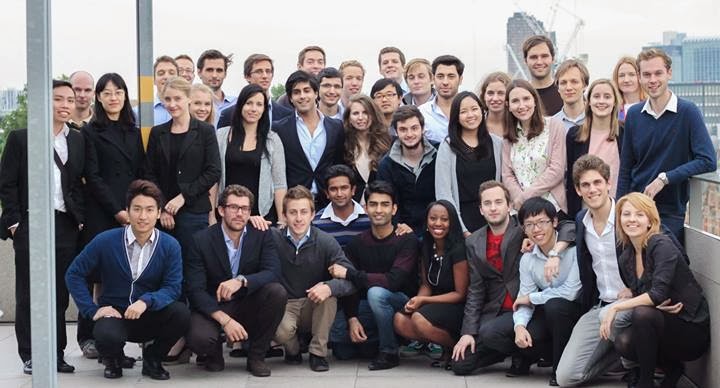
The time in London was incredibly great! Our CEMS group consisted of ca. 35 students from all over the world. I had never met such an international and diversified group before and I really loved this experience. Because the group is not as big, it is very easy to stick together as a group. We organized a lot of activities like travelling to Brighton or Cambridge, enjoying Winter Wonderland in Hyde Park, watching Billy Elliot’s Musical, playing laser tag or just going partying or out for drinks. You will never be bored in London because it offers you everything you want and much more. Time was just too short to even experience more of this wonderful city. I guess I’m not going to say more about this city, because it would blow up this document. But I will ensure you that you will adore this city!

Courses
Believe it or not, but from my point of view, LSE is not as hard as everyone expect it to be! The quality of the teachers are very good and the courses are much more theoretical and based on academic papers than at Nova (for the Germans: more like at German universities). The workload within the semester is not as high as at Nova because you normally don’t do that many assignments (always dependent on the course you are in).

Evolutionary Psychology and Management: It is not a Management Class at all! And it also has nothing to do with Diversity management or HR as some people expected this! A lot of people are very critical about this course because it deals with some ambivalent topics. I really enjoyed this class, because it was very different compared to anything that I have been doing before. Moreover, it gives you some new perspective on human behaviour. The grades are only based on oral participation. Thus you need to read and prepare parts of the Professors book beforehand. There will be a lecture, where you get more theoretical background information and a seminar where you can asks questions and discuss the topics you have prepared.

Corporate Finance A: I guess the content is very clear for that one. The lecture was not as hard and there was a seminar every week, for which you had to prepare some answers for the homework questions. I normally didn’t do it and still had no problem with following up the classes. The grade is based 100% on a final exam, which is definitely doable!

Managing Digital Business: The topics are very interesting, if you like talking about Cloud Computing, E-Governance etc. from a managerial perspective. The grade is based on 10% oral participation, 20% a literature review in Week 5 and 70% an assignment at the end of the semester. You can choose your own topic and I pretty much enjoyed this class. For the seminar, there is always one group who will present a topic and discuss it with all the students. So it’s very interactive.

Housing
I found my apartment on airbnb and just wrote the landlord whether she would be interested to rent it out for 3 months (if she goes down with the price). And yes, it worked out. It is very hard to find something and it is very very pricey!! Try to get into a student residence – even though some argue online that they only do one-year contracts, it is mostly possible to rent it for a shorter time.


University
The university is in the middle of the city and more like a campus. Everything is very modern and well organized. There is a gym on campus for 80 GBP per semester (I didn’t use it as there is only a limited amount of treadmills etc., you can also get great deals with other gyms such as Nuffield Health, YMCA, Fitness first, LA Fitness). The library is very big, you have quiet areas and group rooms. Printers and computers are everywhere.

There are hundreds of events every week at LSE, from consulting workshops and networking events to lectures and discussion with Nobel Price winner like Muhammad Yunus. If you want to get a broader perspective within Politics and Economics and you do not only want to dig around Business, you will find everything you want at LSE!

The big Consulting and Investment banking firms are all available at uni, and some firms like Merrill Lynch even have more than one event per week. You also find all the companies of the FMCG industry as well Online firms such as Google.
There are many, many recruiting events at LSE and you can basically attend one every day if you feel like it J

Sightseeing
My tip: Try to go to a new bar, pub or restaurant every time you go out! There are a lot of nice places in Shoreditch, Covent Garden, Soho and Fitzrovia.

Visa
No Visa for Europeans necessary!

Vaccines
No vaccines necessary.

Surprises
When you do your exchange semester in London in the fall term, there will be no LSE CEMS student. The group consists only of INCOMING CEMS students. But this is no problem at all. You will love this small and very international group!
 --
By Tania Moser, Class of 2014/2015

Term abroad - Fall 2014
Nationality: German         
Country of residence: Germany
Home School: Nova School of Business and Economics
Host School: London School of Economics and Political Science
 

Tuesday, 11 February 2014

# 10 The London School of Economics and Political Science (LSE)


LSE experience - London, United Kingdom


University

LSE is located in Holborn, in the heart of London and can be easily accessed by public transport (Bus and Tube, Holborn and Temple tube stations). It is a campus composed of several buildings very close to each other and courses take place all over the campus. The buildings are not beautiful, but modern and offer all the conditions for a fruitful learning environment. The library is huge and you can find any resources you need for the courses. Also, most of the computers available (also for printing) are located in there. However, throughout the whole semester, it can be hard to find available learn space and computers. This is even more complicated with groups and towards the end of the term.


The main strength of LSE is certainly is the brand and the ability to attract both, interesting corporate partners (IB, consulting and some other) and highly renowned speakers to hold networking events, career fairs, presentations and speeches every day.

LSE Library


New Academic Building (Block Seminar and some classes take place here)


Block Seminar

The block seminar took place at LSE in Holborn and was titled “Leadership in organisations”. It was a great opportunity to meet fellow CEMS students (many of which are Germans). There were some readings to do but overall workload was rather soft and allowed enough time to discover London’s perks. It also hosted several guest speakers from, both, LSE and corporate partners, e.g. Google and P&G which seems to be LSE’s favourite partner ;-) Presentations took place on the last day of the seminar and due to the fact that all presentations were so good, all groups received an A. 
During that week, the CEMS Club and CEMS team also provided for social events such as a bowling evening and a networking event with alumni and corporate partners. During lunch breaks, food was provided, but quantity and quality are rather low and it turned out to be the same on several days.


At the CEMS Block Seminar


Courses

Course choice takes place during the first week of LSE and it can be really messy because it is not always clear which courses you will get in the end (of those that you applied for) and which you have to attend. For some classes, you need to write a cover letter or take an exam. In addition to courses, seminars (practical classes) have to be chosen for most of the courses.

Grades and the type of assessment can vary greatly dependent on the courses you choose. In general, contents are very theoretical (a lot of readings and essays) and there are mostly no group works. Workload is not especially high and tends to come up towards the end of the term. Usually, exams are in the summer term after the academic year. As Nova CEMS students won’t be able to attend, assessment was based on essays or, for some courses, exams during the term.

In the following, some courses that we have taken:
Business in the Global Environment (mandatory strategy course): Not a strategy course at all!!! It can be rather compared to a basic macroeconomic course, but with a focus on pragmatic cases instead of an analytical perspective. In the end of the semester, we had to write one exam (rather simple) and hand in an essay in January to moodle (3000 words on one topic of the course).

The Analysis of Strategy A: More strategy than the previous course, it is mainly founded in microeconomics and game theory concepts, so it should be easy if you have taken these courses at Nova. Towards the end of the term there are some case discussions. To be enrolled in this course, you have to do an exam in the first week (no studying is required or even possible), but many people were unable to get the required grade in this. Course assessment is 50% a game theory problem set and 50% an exam in the last week, both of which are very easy. Classes can be boring, though, and the pace is very slow.

Accounting, Strategy and Control: Not really an accounting course (there are almost no numbers there), it is more related to governance and how to design effective control systems/performance evaluation. The professor is very good and classes are interesting. There is a case study to discuss in each practical seminar. Assessment is based on 4 essays done throughout the semester, and depending on the effort you put in it, the workload can get considerable. Grades are not great in this course (as it is usually the case with essay assessments at LSE, where you never get full points for a “right” answer, so don’t be fooled by the translation of a 70% to A, because this is not easy to achieve).

Financial Reporting, Capital Markets and Business Combinations: Not an accounting course either. Focus is rather on general reporting issues such as accounting for value creation with special emphasis on cash flows and revenues, business combinations, corporate disclosure, capital markets efficiency, and corporate governance. The course was interesting and assessment was based on one assignment during the semester (some calculations and a small essay) and a presentation on one case study for CEMS students. Overall, the course is not very difficult.

Principles of Decision Science: This course focuses on human’s decision capability in a descriptive and normative way, both, in a practical and theoretical way. It covers the foundations of decision theory; models and theories describing how people form preferences, make judgments, deal with conflicting objectives, uncertainty, and risk. It is highly interesting, but some formative coursework (essays and problem sets) have to be handed in, although not graded. For CEMS students, assessment is based on an essay that has to be written after the semester (3000-4000 words).

Negotiation Analysis: Classes are very theoretical and reading-based, whereas practical seminars are very interesting and interactive, consisting of negotiations among students. Assessment was 100% exam and requires several readings.


Life in London

As you expect, London is a very expensive city to live in, and be prepared to spend enormous amounts on everything, especially accommodation! Supply of rooms for less than 6 months is very scarce and rents can be 30% higher than regular, long-term rents. Please pay attention to the fact that rents are presented on a weekly, not monthly basis.

The transportation network works very well, although it is very crowded during peak hours; and during weekends some tube stations were closed for maintenance and you have to take the bus, which can take longer due to traffic but also run frequently. If you miss a tube, don’t worry, the next one arrives in 2-4 minutes (sometimes 5-7 at night)! The tube is also connected to Heathrow airport, although you can take more comfortable ways (much more expensive) to the airport if you carry a lot of luggage! Tube services close shortly after midnight, but there are plenty of night buses (if you live in a nice location!) For 81£ (~100€) you can buy the monthly pass for tube & bus (already with student discount!). Taking a cab is very expensive!

Canary Wharf – London’s new financial centre

The city is huge and there is a lot to do and discover, and you never get bored. However, that also means that travel time is not negligible. Social life takes place all over the city. However, there is also an LSE pub which is relatively cheap and suits for an after-class pint of beer (or two or more). Covent Garden which is very close to LSE is also a nice area with restaurants and bars (can be pricy as everywhere!). 
Pubs usually close at 11 or midnight and if you want to go out afterwards, there are several areas to go out. Usually, places in the east and north (Shoreditch, Camden) are much cheaper while bars and clubs towards the west and the centre are more suited to wealthy individuals. Fabric (close to Barbican) and Ministry of Sound (Elephant & Castle, south of the Thames) are probably the most famous clubs and host well-known DJs, but are also expensive. It is rather seldom the case that all CEMS student are joining because accommodation is widespread over the city and there haven’t been many CEMS Club activities during the term (actually none at all). That might result from the fact that all LSE CEMS students are abroad during the first term.

Regarding football matches, it is not easy to get ticket although not impossible. From my personal perspective, teams in the east exhibit a better atmosphere in the stadium and are a worthwhile alternative (e.g. Tottenham at White Hart Lane).

If you have any questions, please feel free to contact Carlos Mirpuri or Trieu Pham.

--

By Carlos Mirpuri and Trieu Pham, Class of 2013/2014

Term abroad - Fall 2013